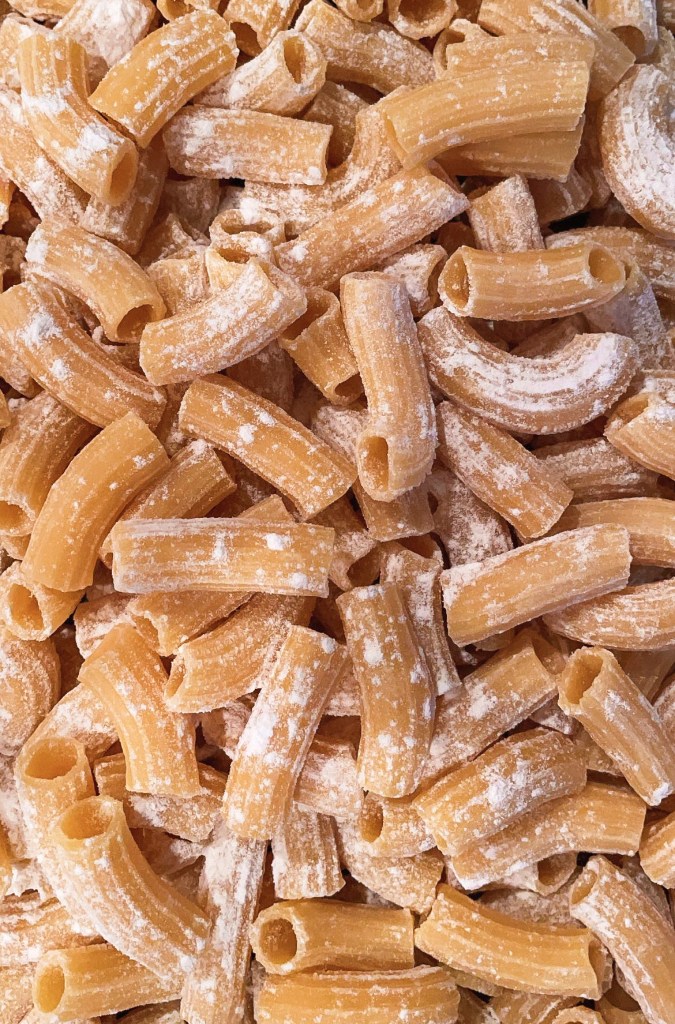
I can’t believe I haven’t written this down anywhere for anyone. All I do is eat, make, sleep, never drink but maybe one day, pasta. So here’s the dough. I’ll add some notes at the bottom for some adjustments. These photos are snagged from my instagram over the past three years, not the best quality but I don’t document much when it comes to pasta just because it’s never really a project.
Most important note though, you do not need a pasta maker to make this dough. You can hand roll it, it takes a little more work but you can get it think enough. What I do recommend above a pasta maker is a bakers bench, they’re like $3 and totally worth it if you bake basically anything ever.
Basic Dough
One hundred and sixty grams of all purpose flour
Fifty grams of semolina flour
Two eggs
Mix both flours together on a clean counter top. Make a well in them, using either a bowl or your hand or however you want to make one.
Crack the two eggs into the center of the well.
With a fork, start mixing the eggs together with one hand and with the other start knocking flour in the well. Once enough of the flour has mixed in the middle to create a sort of sludge, knock the rest of the flour in. Here you can use your bench to lift and flip the flour and eggs into themselves to combine easier, if you don’t have a bench, just start pushing everything together to make the dough.
There will be scraggly straggler pieces of dough and it will start off messy. Start kneading the dough.
Knead for at least ten minutes, making sure to spread it out and frequently flip and fold with each knead, really work that gluten. Also make sure to pick up the straggler pieces of dough. You make break a sweat by the end. The final dough ball should be smooth and when pressed lightly with your finger should spring back.
Wrap the dough in cling wrap and leave it in the fridge to rest for at least two hours, preferably a day.
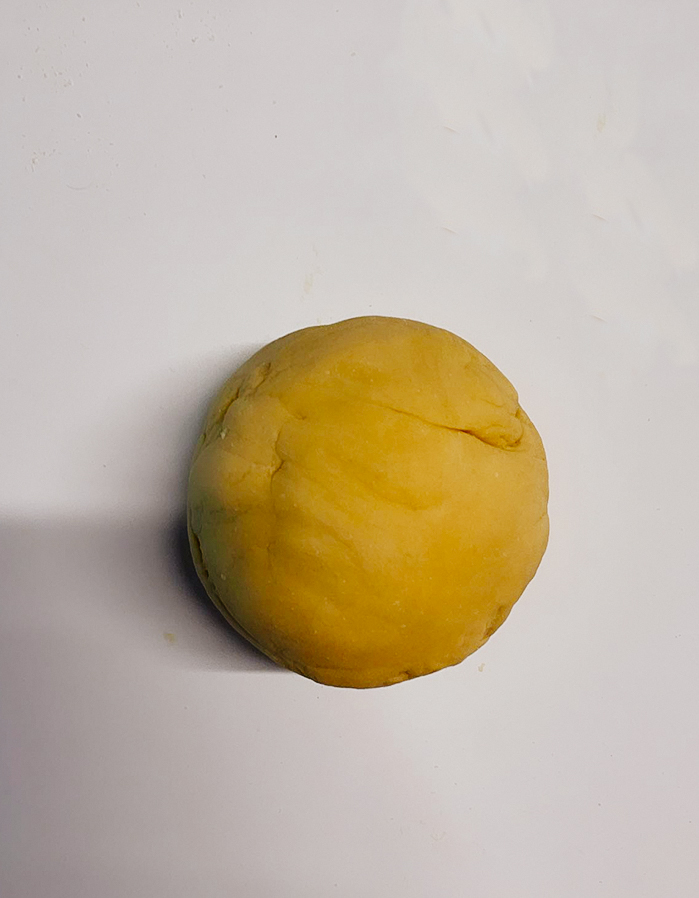
After the dough has rested, cut the ball in half and roll out it out. The trick to a basic roll out, using a machine or by hand, is to laminate the first two rolls. So roll it out, fold in half, roll again, fold in half, then continue rolling out normally. If using a machine, for each thinness level repeat twice just to make sure everything is even. If going by hand, make sure to only roll in one direction, back and forth won’t let the dough stretch and thin out.

Cut, slice, shape, stuff, cook, do whatever, enjoy!
Notes:
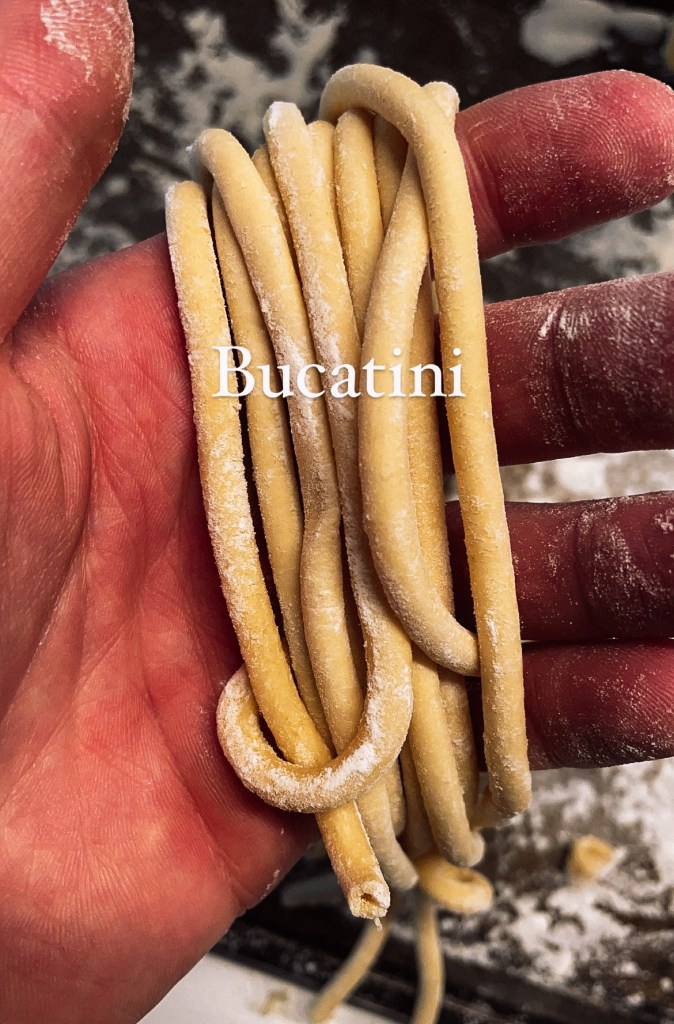
Each pasta type requires a slightly different variation of thickness, dough strength, and drying level. Thicker pastas I always say need more semolina, for stuffed pasta you need the sheets to be almost see through, of spaghetti like pasta it needs to dry for at least twenty minutes before cooking. I’ll be adding more recipes for specific pasta dishes as time goes on and I will make sure to point out adjustments to the dough for each type and the reasons why.
Also, egg yolk color makes an impact on how the pasta looks not the taste. You can find some huge variations depending on where you buy your eggs from, but it doesn’t matter at the end of the day. If you want some deep orange or red yolks usually check out your local farmers market and talk to the farmers selling eggs, but the grocery store runs just the same.
 breadandboredom.com